
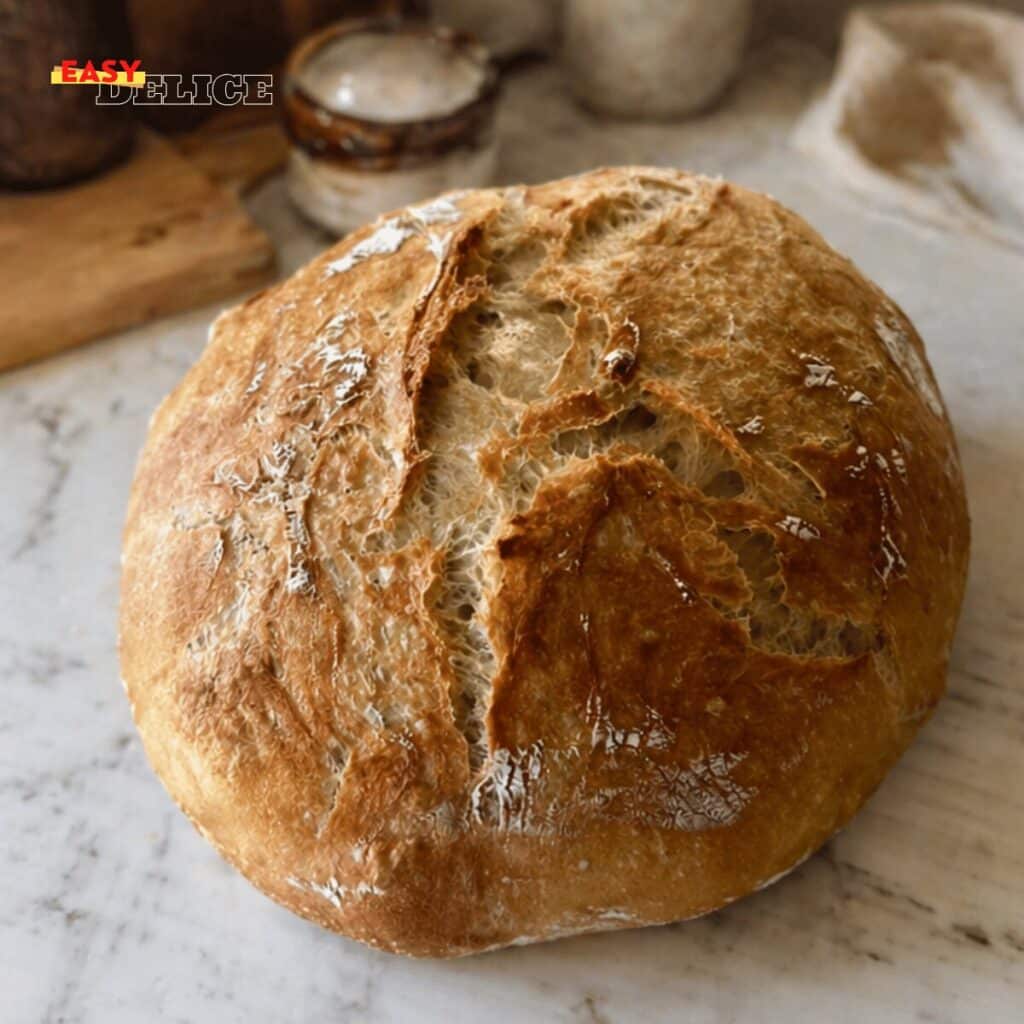
This homemade sourdough bread is a must-have from any artisan bakery. 
With its golden, crispy crust , light and airy crumb , and slightly tangy flavor , it rivals the best bakery loaves.
 Result: rustic + airy + ultra tasty .
 Why is this bread exceptional?
- Traditional technique : autolysis + slow fermentation
- Aerated crumb : light and well-developed
- Unique taste : deep sourdough aromas
- Bakery effect : cooking in a casserole dish
 Quick Information
| Format | Preparation | Fermentation | Cooking |
|---|---|---|---|
| 1 loaf | 20 min | 12–6pm | 40 min |
 Ingredients
 Flour (T65 or mix T55/T80) – 500 g
 Water – 350 ml
 Active sourdough starter – 100 g
 Salt – 10 g
For cooking
- Flour (shaping)
 Cast iron casserole dish (ideal)
 Preparation
1. Autolysis (bakers’ secret)
- Mix flour and water until a smooth dough forms.
- Let it rest for 30 minutes
Effect: natural development of gluten.
2. Incorporating the sourdough starter and salt
- Add the active sourdough starter and the salt
- Mix until fully incorporated
3. Initial rest
- Let it rest for 30 minutes
4. Flaps (key to an airy crumb)
- Stretch the dough and then fold it over itself.
- Repeat every 30 minutes
- Make 3 to 4 sets of folds
Result: a light and airy structure.
5. Slow fermentation
- Allow to ferment for 8 to 12 hours at room temperature
- OR in the fridge for more flavor
6. Shaping
- Form a ball or an oval
- Handle gently
7. Primer
- Place in a banneton or floured bowl
- Let it rest for 1 to 2 hours
8. Baking (bakery effect)
- Preheat the oven to 250°C with the casserole dish inside.
- Place the dough and make an incision.
- Cook for 20 minutes with the lid on
- Lower the temperature to 220°C and cook for 20 minutes uncovered.
Result: golden and crispy crust.
9. Cooling
- Let cool on a wire rack
Important: wait before cutting for a perfect crumb.
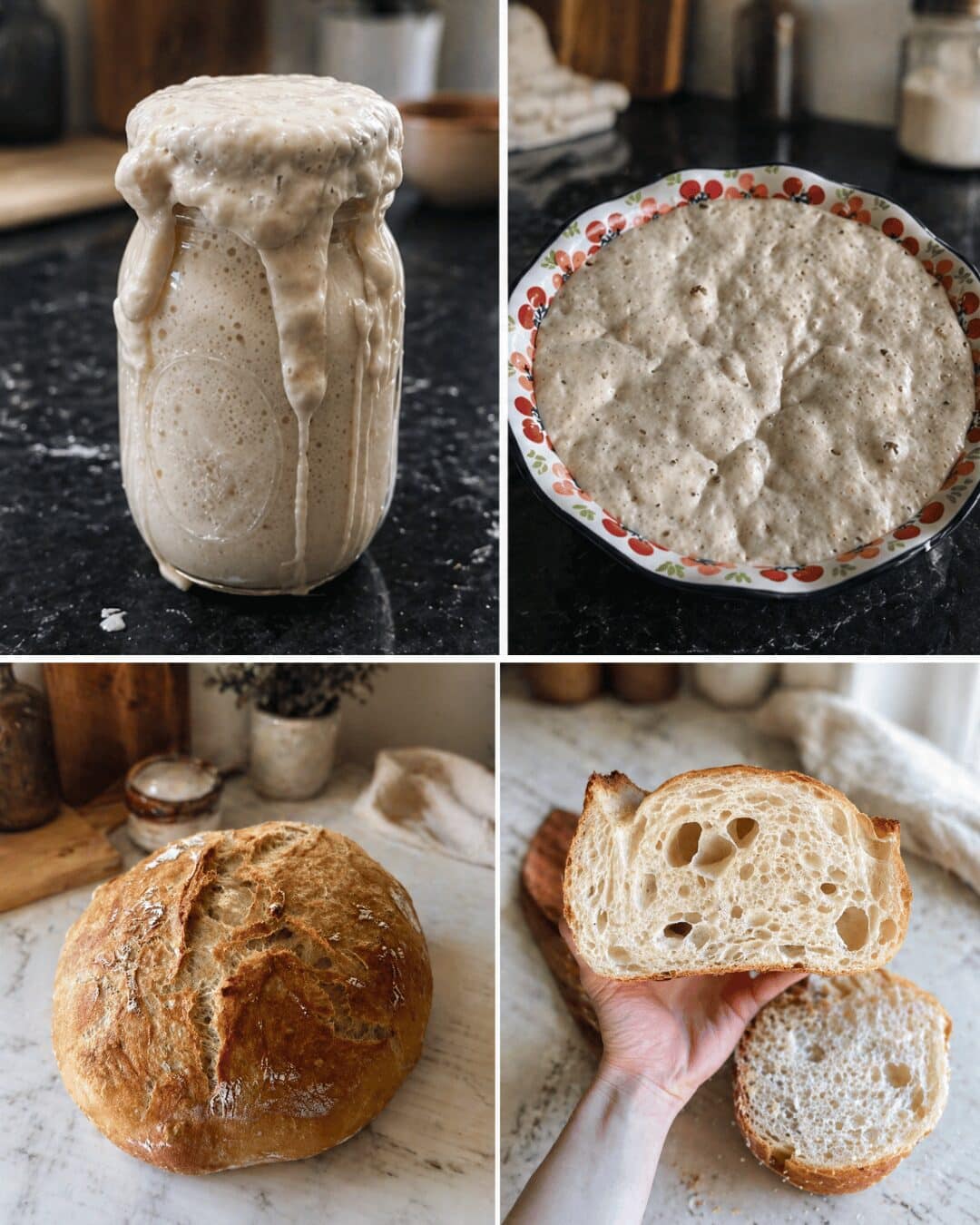
Final result
 Crispy crust
, airy and light
crumb, slightly tangy flavor,
artisanal bread worthy of a bakery
 Conservation
- Store in a clean cloth at room temperature
- Avoid the refrigerator
- Can be kept for 2 to 3 days
- Can be frozen after cooking
 Comparative Methods
| Method | Crust | Mie | Result |
|---|---|---|---|
| Cocotte |
 |
Airy | Pro |
| Conventional oven |
|
Correct | Home |
 Added steam Added steam |
|
Good | Very good |
 Chef’s Tips
- Active sourdough starter → lighter bread
- Slow fermentation → more intense flavor
- Cooked in a casserole dish → perfect crust
- Rest before cutting → non-sticky crumb
 Mistakes to Avoid
 Weak sourdough starter → dense bread
- Not enough flaps → compact crumb
- Cooking without steam → hard crust
- Cut while hot → sticky texture
 Everyday Well-being & Health Insurance
Homemade sourdough bread is part of a movement towards artisanal cooking
and a return to simple products. Adopting varied and natural eating habits
contributes to overall well-being , where appropriate health insurance
allows you to approach daily life with greater peace of mind.
Health insurance
- Reimbursements for care
- Custom cover
- Everyday protection
 Natural food
- Simple products
- Homemade recipes
- sustainable habits
 daily well-being
- Work-life balance
- Comprehensive prevention
- Daily serenity
Note: prioritizing homemade products and
good health coverage contributes to a balanced lifestyle in the long term.
 FAQ
FAQ
Why isn’t my bread rising?
The sourdough starter isn’t active enough or the fermentation is insufficient.
Can we do without a casserole dish?
Yes, by adding a container of water to the oven.
How to get large air pockets?
High hydration + flaps + long fermentation.
Can bread be frozen?
Yes, ideally already sliced.
Conclusion
This homemade sourdough bread is a true artisanal success. 
Crispy, fragrant, and authentic, it enhances any meal.

Leave a Reply